A Brief Note
Skills-first hiring assesses candidates against capabilities relevant to the job. For women returning to paid work, it can create a route to demonstrate current ability without having a career gap treated as a verdict. That promise depends on what happens before, during and after the assessment: who gets invited, how the work is evaluated and whether the evidence carries through to the final decision.
Skill-first hiring: At a glance
- Removing an unnecessary degree requirement is a starting point; selection criteria and decisions must change too.
- A career break can prompt a fair assessment of current skills. It should not substitute for one.
- Work samples should be relevant, bounded and accessible, with scoring criteria agreed in advance.
- AI can help organise evidence at scale. Its recommendations still need testing and a route for correction.
- Leaders should examine who progresses through hiring and what happens to recruits once they join.
Who gets the chance to show their skills?
A woman returning to work after a career break may be asked to explain the missing years before she is given a chance to demonstrate what she can do now. For me, that is a useful test of skills-first hiring. Does the employer investigate her ability, or does the gap decide the outcome before the assessment begins?
Ask an HR leader whether skills should matter more than pedigree, and the answer will usually be yes. The harder question is what a candidate must do to be taken seriously when her career looks different from the people already on the team.
Employers have legitimate concerns about readiness. Tools change. Some roles require current qualifications or licences. A returning candidate may need training. But a date on a CV cannot tell us which skills remain strong, which need refreshing or how quickly someone could become effective.
Those are questions a hiring process ought to answer.
Skills-first hiring: What changes when skills come first?
The World Economic Forum’s Future of Jobs Report 2025 found that surveyed employers expected 39% of workers’ core skills to change by 2030. That is a forecast, not a finding that everyone’s existing skills have already expired. It is a reason to examine whether a job description still reflects the work.
Start with what the person needs to deliver. For an analyst, that might mean finding errors in a dataset, choosing an appropriate comparison and explaining the result to a colleague. A famous college name offers limited evidence about those specific abilities. So does an impressive job title.
This approach also makes the barriers in women’s hiring easier to examine. If a requirement is continuous employment, ask what capability that is meant to establish. If the answer is familiarity with current tools, assess familiarity with those tools.
A requirement that is necessary for the job should survive that scrutiny. One that merely makes the shortlist look familiar should not.
Why does changing the advert achieve so little?
A 2024 study by Harvard Business School and the Burning Glass Institute, examining US hiring, found that roughly 45% of firms studied made changes in name only. So, removing degree requirements did not produce a meaningful change in actual hiring behaviour.
The finding is not an estimate for India. It does expose a practical problem any employer can recognise. A recruiter can remove the degree requirement while interviewers continue to favour particular colleges. A company can welcome career breaks on its website while its screening rules still penalise gaps.
I would judge a skills-first initiative by the decisions it changes. A candidate who would previously have been screened out must have a credible route to assessment. Strong evidence from that assessment must then count when the hiring team makes its choice.
What does a useful skills map contain?
A working skills map needs a common language, clear proficiency levels and evidence that stays current. It should distinguish related capabilities rather than collapse them together. Preparing an MIS report, analysing data and interpreting a business trend may overlap, but they are not automatically the same skill.
Each capability needs an observable standard. “Good with data” leaves too much room for interpretation. “Can identify inconsistencies in a sample dataset and explain how they affect the conclusion” gives an assessor something to evaluate.
Record where the evidence came from and when it was demonstrated. A project, a work sample and an employee’s self-assessment are different kinds of evidence. Keep those differences visible. Give candidates and employees a way to correct an inaccurate record.
The map should also help leaders see what can be learned. Someone may have the underlying reasoning skills for a role while needing practice with a particular tool. Whether that is a manageable gap depends on the role, available training and the time before independent performance is required.
Can an assessment create barriers of its own?
Consider an analyst vacancy. A short exercise using synthetic data can ask candidates to identify a problem and explain their reasoning. Agree on the scoring criteria before reading the answers. Give assessors examples of stronger and weaker responses, and have them score independently before discussing differences.
That is consistent with the principles behind structured interviews: job-related questions and a shared basis for evaluating answers.
The assessment also needs to fit real lives. A long, unpaid assignment handed out on Friday for Monday morning may select for spare time as much as capability. It can disadvantage caregivers and people already working demanding shifts. An inaccessible test can prevent a disabled candidate from demonstrating a skill they possess.
Keep tasks proportionate. Explain the time commitment, allow a reasonable completion window and provide an accessible way to request adjustments. Substantial assignments should be paid. State whether AI tools are permitted and how candidates should document their use.
None of this requires assuming that every woman is a caregiver. It requires examining what the assessment actually measures. The question raised by return-to-work initiatives is relevant here: how does a capable person get a fair opportunity to demonstrate readiness?
What should AI be allowed to infer?
Digital tools can help search large volumes of work histories, connect evidence to skills and update records as people complete projects. At scale, that can be valuable. A small employer can still begin with a well-designed scorecard and careful records; software does not have to precede clarity.
An inferred skill remains an inference. A job title may hide expertise. A career gap may be interpreted as a lack of recent experience. Applying the same scoring rule to everyone does not make the rule fair.
I would ask a vendor to demonstrate what its system measures, how it was tested for the role and where it performs poorly.
- Can a candidate correct an error?
- Can the hiring manager identify the evidence behind a recommendation?
- Can they override it and record why?
Human involvement has value only when the person can exercise that judgement. A final approval click adds little if nobody understands the ranking or has time to challenge it.
How can leaders tell whether the system works?
Begin with one role family. Bring hiring managers, recruiters and people doing the job together to define the essential capabilities. Separate what a new recruit must already know from what the organisation can teach. Give a senior leader responsibility for the process and the time needed to review it.
Track who applies, who reaches assessment, who passes, who receives an offer and who accepts. Where appropriate and lawful, examine patterns by gender, career-break status and other relevant characteristics, with transparent, voluntary data collection and privacy safeguards. Do not ask an AI system to infer sensitive identities.
A gap in outcomes is a reason to investigate. It does not, on its own, explain the cause. Check the assessment, recruitment channels, scheduling and scoring. Small samples need particular care.
Then follow the hires. Look at performance, retention and access to development, using comparable roles and consistent criteria. First-year ratings may themselves reflect uneven assignments or support, so they should also be open to scrutiny. Faster hiring is useful; it is not sufficient evidence of better hiring.
Let the evidence count
A woman returning after a break should not have to persuade an interviewer that her life followed the correct sequence before she can show her ability. A first-generation graduate should know what the employer will assess. An internal applicant should be able to point to work they have already done.
Skills-first hiring earns its credibility when that evidence can change a decision. Leaders who want it to work must be prepared to change who reaches the interview, how they are assessed and whose contribution the organisation is willing to recognise.
Author bio and disclosure
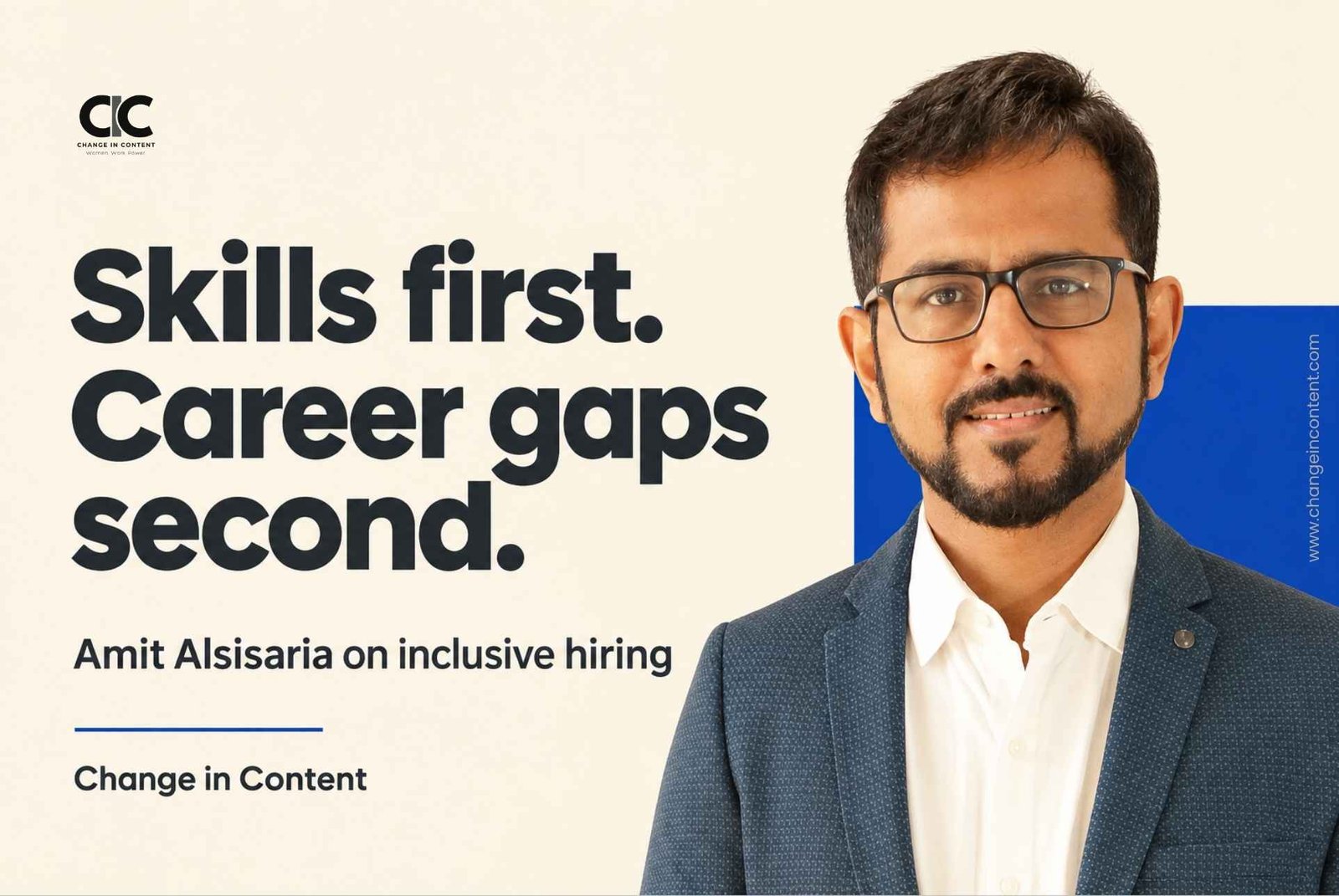
Author bio: Amit Alsisaria is the co-founder of Xumane Recruit, an AI-led hiring platform. This contributed opinion examines how employers can put skills-first hiring into practice.
Editorial note: This article has been edited for clarity, focus and sourcing. The author’s commercial affiliation is disclosed above. The views are his own. Publication does not constitute an endorsement of Xumane Recruit or its products. Overseas research is identified as such and is not presented as a measure of Indian hiring practices. Candidate scenarios illustrate proposed practices; they are not reported case studies.
Sources for publication
- World Economic Forum: Future of Jobs Report 2025, Skills Outlook. Employer expectations for 2025–2030.
- Harvard Business School and Burning Glass Institute: Skills-Based Hiring, February 2024. US study comparing changes to degree requirements with hiring outcomes.
- US Office of Personnel Management: Structured Interviews. Practical guidance on job-related questions and common rating standards.