
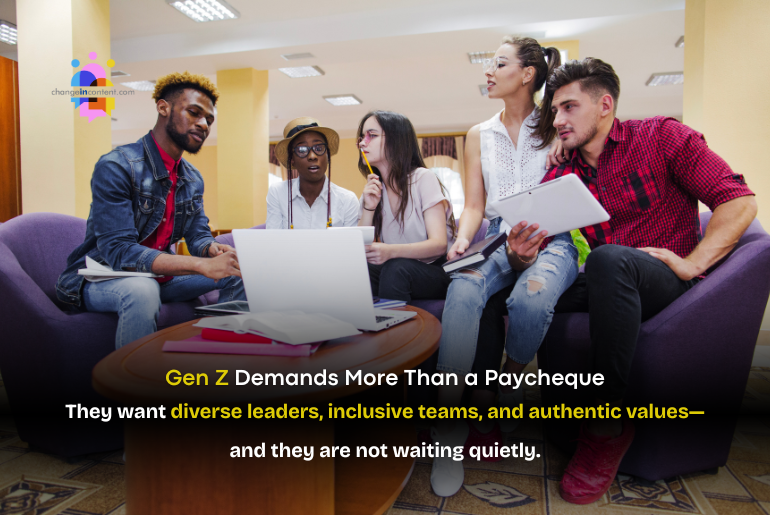
India’s workplaces are at a generational crossroads, and Gen Z is drawing the line. According to the latest ManpowerGroup report, 56% of Gen Z workers say they would not accept a job without diverse leadership. 68% believe their organisations are not doing enough to build inclusive environments. So, it is time that organisations know that Gen Z demands diversity and inclusion.
This generation, born between 1995 and 2010, is entering the workforce with expectations. Global movements, internet literacy, and a deep sense of social responsibility shape these expectations. Diversity, equity, inclusion, and belonging (DEIB) are core expectations, and not just corporate checkboxes. In this “New Human Age,” as ManpowerGroup terms it, Gen Z is demanding more than just a job. They want purpose, authenticity, and workplaces that reflect the world they live in.
Gen Z demands diversity and inclusion: The data speaks loudly
The numbers in the report are not just reflective; they are instructive:
- 68% of Gen Z workers are dissatisfied with their employer’s DEI efforts.
- 56% would not accept a role without visible, diverse leadership.
- 52% believe companies are not doing enough to protect the environment.
- 88% said the pandemic permanently changed what they want from work.
These are not casual complaints. They are signals of a generation willing to walk away from workplaces that lack values. They are rejecting superficial DEI statements and demanding structural action.
What this means for Indian workplaces
India is one of the youngest nations in the world, and Gen Z will make up 27% of the global workforce by 2025. In India, that figure will be even higher. Companies that fail to align with their expectations risk losing not just talent, but relevance.
Indian workplaces still struggle with performative diversity. Leadership remains largely homogeneous in caste, class, and gender. Many companies have token DEI committees but no accountability. And conversations around inclusion still tend to revolve around gender. They ignore intersections of language, neurodiversity, region, and identity.
To engage Gen Z, Indian companies must go beyond generic training modules and begin reshaping the way work is structured, communicated, and led.
How can companies walk the talk?
Here is what Gen Z is really asking for, and what organisations can do:
1. Ensure diverse leadership
If the leadership team looks the same, speaks the same, and comes from the same circles, Gen Z sees that as a red flag. True representation must include gender, region, caste, disability, and LGBTQIA+ voices, not just at the entry level but at the top.
2. Make inclusion measurable
Host listening sessions. Furthermore, track representation across levels. Publish DEI impact reports. Gen Z trusts transparency, not promises. Use data to show (not tell) what inclusion looks like inside your organisation.
3. Promote psychological safety
Gen Z is more likely to speak up, question norms, and challenge hierarchy. If doing so earns them labels like “rebellious” or “too outspoken,” they will leave. Create spaces where feedback is welcomed and lived experiences are validated.
4. Embrace flexibility as a value
This generation values freedom over facetime. Offering flexible schedules, hybrid options, and result-oriented evaluation systems are not perks; they are expectations.
5. Define your values, and live them
DEI cannot be separated from ESG. Gen Z wants to work for companies whose ethics match their actions. Whether it is gender pay equity or carbon footprint reduction, the alignment must be visible and verifiable.
Conclusion: Gen Z demands diversity and inclusion, not as a trend, but as a standard
This is not a moment, it is a movement. Gen Z’s demands are not unreasonable. They are logical extensions of the world they grew up in. They want to be seen, heard, and respected. Moreover, they do not just want to be marketed to during Pride Month or Women’s Day.
If companies in India want to stay relevant, competitive, and future-ready, they must stop treating DEI as an HR initiative and start treating it as a leadership imperative.
For more on generational equity, read: The ageism impact: How it affects Gen Z and Millennial women more.
Disclaimer: The views expressed in this article are based on the writer’s insights, supported by data and resources available both online and offline, as applicable. Changeincontent.com is committed to promoting inclusivity across all forms of content. We broadly define inclusivity as media, policies, law, and history, encompassing all elements that influence the lives of women and marginalised individuals. Our goal is to promote understanding and advocate for comprehensive inclusivity.
