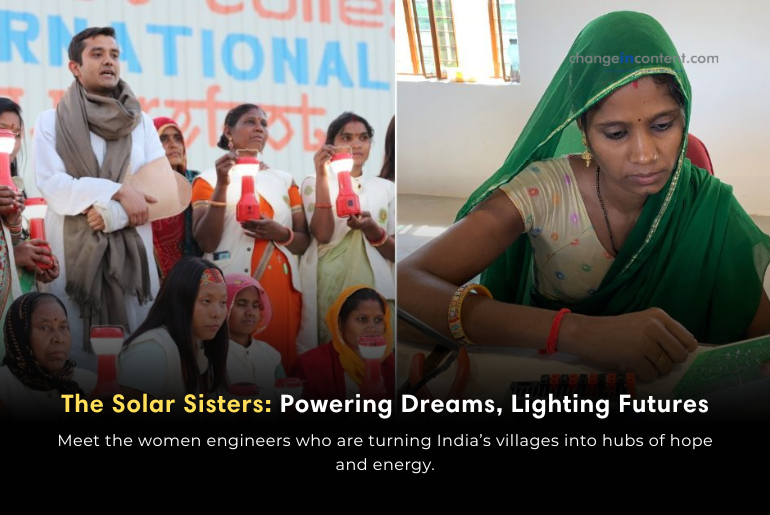
In a country where women in rural areas have long battled systemic barriers, a quiet yet powerful revolution is taking place. The Solar Sisters are rewriting not just their own destinies but the energy landscape of India’s remotest villages.
The Solar Sisters initiative, led by Harsh Tiwari through EMPBindi International, showcases how rural women (armed with technical skills and solar panels) are bringing light, livelihood, and dignity to thousands of households.
Breaking traditions with The Solar Sisters Mission
For centuries, women in India’s remote areas were confined to domestic chores, seldom venturing beyond village limits. Education remained a distant dream, and technological fields an unimaginable frontier. Yet through focused training programs, Harsh Tiwari has opened new doors, proving that solar engineering is not a man’s job alone.
Women like Thavri Devi, once limited to tending livestock, are now certified solar engineers. Today, Thavri installs, repairs, and maintains solar lighting systems in her community, earning recognition and respect like never before.
The Solar Sisters: Learning to lead and illuminate
The heart of this transformation lies in a five-month rigorous training course. Covering everything from soldering and wiring to fault diagnosis and battery setup, the curriculum turns women into full-fledged solar engineers.
But it is not just about installing solar lights but about instilling confidence. Every repair, every installation strengthens their presence in the village’s social fabric, making these women indispensable change-makers. And the journey does not end with training: they remain the trusted go-to experts for anything solar in their communities.
Building energy access through The Solar Sisters
EMPBindi’s model goes beyond just technical skills. It deploys a hub-and-spoke approach:
- Solar Engineers serve as the village-level hubs, maintaining decentralised renewable energy systems.
- Solar Sakhis act as spokes, expanding access to surrounding areas by promoting solar-powered livelihood solutions.
Together, they ensure that rural energy access is not just built but sustained while also nurturing entrepreneurship among women who once hesitated to leave their homes.
Changing mindsets and community structures
Initially, persuading families to let women enrol in a five-month training program was an uphill battle. Deep-seated patriarchal traditions resisted change, but persistence paid off.
Today, these women earn monthly incomes, repair vital infrastructure, and most importantly, command authority and admiration. Panchayat meetings that once excluded women now see Solar Sisters sitting confidently at the table, discussing technical solutions for the village.
It is no longer unusual for a woman to lead an energy project; it is the new normal.
Harsh Tiwari: The man behind the mission
Harsh Tiwari’s own journey shifted gears after a fellowship exposed him to rural India’s realities. He realised that we cannot fight energy poverty with charity alone. Instead, it requires skills, ownership, and dignity.
By betting on women as the torchbearers of rural renewable energy, Harsh has ignited an unstoppable movement. His vision is simple yet profound: “The goal is not just to provide light but to illuminate all facets of life.”
Under his leadership, EMPBindi International has powered over 3,000 homes, trained more than 300 women across 10 states, and distributed 6,000+ solar devices, and this is just the beginning.
The closing thoughts
The Solar Sisters prove that when women lead, entire communities transform. They are not just lighting homes; they are lighting a path toward dignity, inclusion, and prosperity.
Through technical empowerment and fearless leadership, these women are rewriting what is possible for rural India — and the world needs to pay attention.
Changeincontent perspective
At Changeincontent, we have long argued that women’s empowerment cannot be reduced to token gestures. The success of The Solar Sisters reminds us of what real empowerment looks like: ownership, skills, respect, and leadership.
For more on how women are challenging traditional power structures, read our article on #NoWomensDay and Women in Leadership. True change is not about celebrating women one day a year; it is about making sure they are leading every single day.
Disclaimer: The views expressed in this article are based on the writer’s insights, supported by data and resources available both online and offline, as applicable. Changeincontent.com is committed to promoting inclusivity across all forms of content. We broadly define inclusivity as media, policies, law, and history, encompassing all elements that influence the lives of women and marginalised individuals. Our goal is to promote understanding and advocate for comprehensive inclusivity.