
The Brief
- Pramerica Life Insurance reports that women’s workforce share rose from 21% in 2022 to 30% in 2026.
- Women’s representation at Vice President level and above increased from 12% to 17% over the same period.
- Its stated support includes SheShines, paid maternity and adoption leave, reintegration assistance and late-travel cab facilities.
- The useful lesson is to connect everyday support with continued access to work and advancement.
- These are company-reported measures and results; the available material does not establish policy-by-policy impact.
Pramerica Life Insurance and the inclusion summary
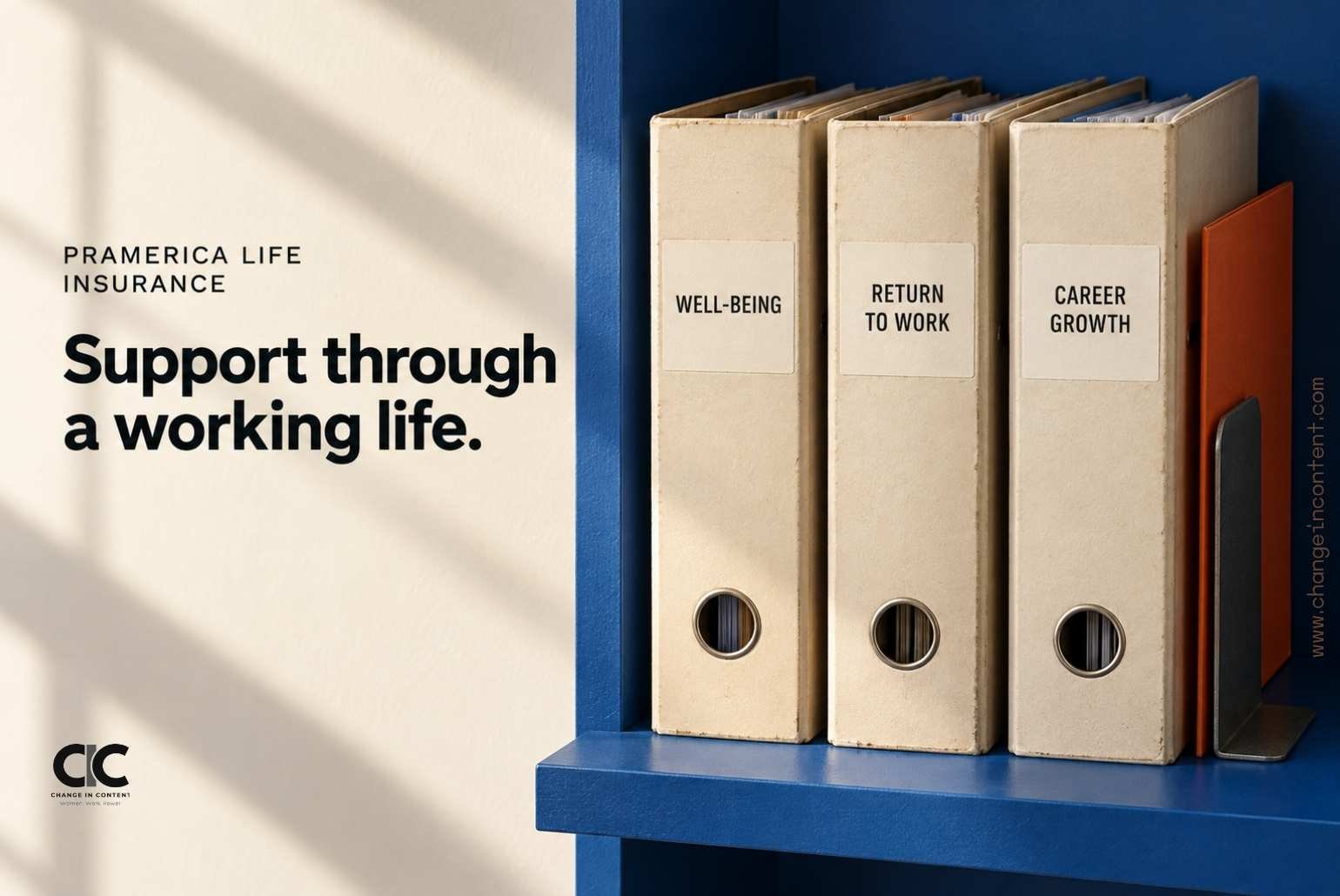
The return date on a leave form is only one part of coming back to work. An employee also needs to know what she is returning to: her responsibilities, her team and her prospects. Pramerica Life Insurance’s stated approach to inclusion makes room for that transition, alongside women’s health, workplace safety and professional development.
For the life insurer, which serves individual and group customers across India, the clearest reported change is in representation. Women accounted for 30% of its workforce in 2026, up from 21% in 2022. At Vice President level and above, their share rose from 12% to 17%.
Those are increases of nine and five percentage points, respectively. They show that women’s presence has grown both across the organisation and within a defined senior group. They do not tell us how much came from recruitment, promotion or retention. Even with that limitation, publishing both figures gives readers a more useful picture than a single workforce percentage.
Making the return part of the policy
Pramerica says it provides 182 days of fully paid maternity leave, paid adoption leave and structured reintegration support. The latter is particularly relevant to the discussion about maternity leave and the return to work.
A period of leave protects time away. A return process can help an employee reconnect with work that has continued in her absence. Teams may have changed, systems may be different, and responsibilities may need clarification. Planning for those changes recognises that continuity requires attention from the organisation as well as the person returning.
The public announcement does not detail Pramerica’s reintegration process or adoption-leave duration. It would therefore be premature to describe specific arrangements, such as phased hours or a guaranteed mentoring partner, as company practice.
Other employers can still take a useful principle from the stated approach: explain the return as clearly as the leave. Agree responsibilities, discuss support needs and keep development opportunities visible. The quality of that transition deserves attention alongside the number of days offered.
SheShines gives women’s needs a regular place
The company describes SheShines as a programme bringing together women’s health, mental well-being, learning and dialogue. Its activities include expert-led sessions covering personal and professional subjects.
That breadth is welcome. Women’s working lives include health needs, aspirations and pressures that cannot all be addressed through a parental-leave policy. A continuing forum creates an opportunity to surface those needs and connect employees with information and support.
Its value depends on what follows the conversation. For any employer running a similar programme, participation should be accessible, personal disclosures voluntary and recurring concerns capable of reaching people who can act. Attendance alone would be a limited measure of success.
Pramerica’s careers page separately describes flexible work policies, wellness programmes and professional development. It does not set out a universal hybrid-work entitlement, so employees and applicants would need role-specific details. The broader lesson is to make support understandable and usable in the actual job.
Safety belongs in the working day
Pramerica also reports a PoSH policy, confidential grievance mechanisms and cab facilities for employees travelling late. These address different needs: a route to raise concerns, a process for handling them and practical help with a journey outside usual hours.
This is relevant to helping women stay in work. An opportunity can be harder to use if the journey home is difficult or raising a concern feels uncertain. Employers should treat these conditions as part of operating the workplace.
For organisations adapting the approach, clarity matters. Staff need to know who can use transport, how to arrange it and where to seek help when an arrangement fails. Complaint channels need trained handling, appropriate confidentiality and protection against retaliation. A policy’s existence should begin that work rather than conclude it.
The leadership figures keep the ambition visible
Pramerica’s reported senior representation remains below its overall female workforce share. The two measures describe different populations, so they are not a direct calculation of promotion chances. They do, however, keep attention on where women are represented within the organisation.
The company also identifies employee-listening forums, mentoring and career-development programmes. Connecting those opportunities to advancement is a sensible ambition. Employers can examine who receives substantial assignments, whose development is sponsored and whether employees using support policies continue to be considered for progression.
The available material does not provide women’s promotion rates, post-maternity retention or programme-usage results. Those would be useful additions to the representation figures. They would help explain which parts of the approach are making the greatest difference and where managers could improve it.
The closing thoughts
Pramerica Life Insurance offers a useful example of bringing several employee needs into one inclusion agenda. Its reported representation gains provide a concrete reason to examine the approach.
The lesson for other companies is practical: Support should remain available through ordinary working days, periods of leave and the pursuit of greater responsibility. Women should be able to use that support and keep moving forward.
Editorial note and sources
This feature draws on Pramerica Life Insurance’s October 2026 company announcement, distributed through NewsVoir, and its official careers and company-information pages. Policies and representation figures are attributed to the company; CIC has not independently audited their implementation or interviewed employees for this article. Practical recommendations are editorial analysis, not additional claims about Pramerica’s policies. Employee benefits may depend on eligibility and role; this is a workplace feature, not an insurance-product recommendation.
- Pramerica Life Insurance / NewsVoir: Company announcement, 6 October 2026
- Pramerica Life Insurance: Careers and workplace approach
- Pramerica Life Insurance: Company overview
