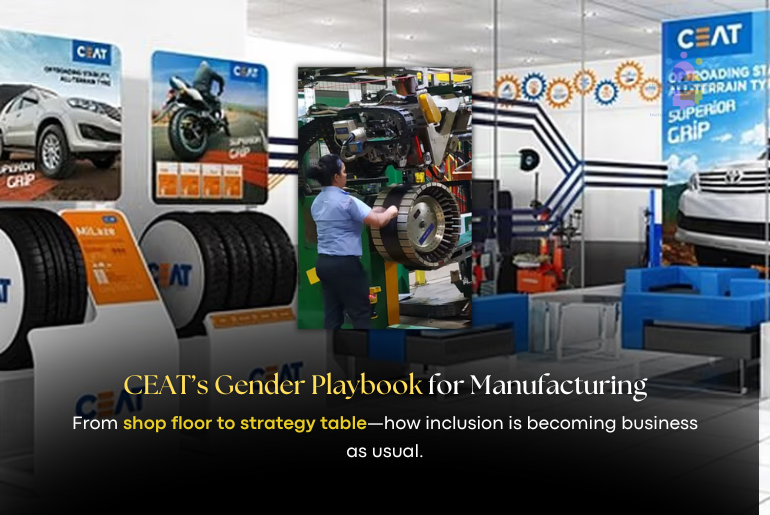
Gender diversity at CEAT is no longer a checklist item. It is becoming a strategy, a culture, and most importantly, a movement. In an industry that still associates the shop floor with masculinity, CEAT is quietly rewriting the script.
At a time when the global DEI conversation risks becoming jargon-heavy and performative, CEAT, under the RPG Group, has anchored its approach in ground-level realities. The company is not just filling quotas. It is building pipelines, rewriting policies, and creating an ecosystem that prioritises representation at every level, from Dharavi to Ladakh, from the floor to the boardroom.
A measured, mission-driven push toward gender balance
CEAT has publicly declared its goal of reaching 25% gender diversity on the shop floor and 20% in leadership (GM and above) by 2027. It is no small feat in a sector where the current average lingers at 6-8%. Currently, CEAT sits at 17% overall gender diversity, with around 9% in senior roles, which is a sharp rise from 11% in 2019.
But these numbers are not just the result of organic growth. CEAT is deliberately building diversity, sometimes even in anticipation of future roles. According to CHRO Somraj Roy, hiring is happening even without immediate vacancies to develop a diverse leadership bench for tomorrow.
Inclusion beyond gender: A holistic DEI approach
CEAT’s diversity lens goes far beyond gender. The company has also focused on socioeconomic inclusion, actively hiring from underserved communities such as Dharavi in Mumbai and the remote regions of Ladakh and Northeast India.
This approach recognises that true inclusion means going beyond optics. It means inviting voices that are rarely heard, training individuals from underrepresented backgrounds, and putting systems in place that make them feel welcome and valued.
Women from defence and EWS backgrounds: The untapped talent pool
In a bold move, CEAT has turned to talent from defence backgrounds and women from economically weaker sections (EWS), often overlooked by traditional corporate filters. This recruitment strategy allows for the inclusion of individuals who bring discipline, resilience, and untapped leadership potential to the table.
By doing so, CEAT is creating a blueprint for inclusive hiring that other companies in the manufacturing sector can take notes from.
The ‘Shakti’ policy and flexible work for shop floor managers
The company’s menstrual wellness leave policy, Shakti, is one of the most progressive in the industry. Introduced even before COVID-19 normalised conversations around well-being, Shakti allows women to take leave during menstruation without requiring managerial approval.
CEAT has also redefined work norms for shop floor managers, offering five-day weeks and even work-from-home flexibility. It is a rarity in manufacturing. The message is clear: inclusion must be baked into operational models, not tacked on as an afterthought.
Happiness over rankings: Internal DEI metrics that matter
In a move that sets it apart from many corporates, CEAT has ditched external DEI rankings in favour of internal happiness indices. These are measured through parameters like connection, growth, value alignment, job satisfaction, and culture.
Feedback from these assessments has directly shaped new policies, unconscious bias training sessions, and leadership development initiatives. CEAT’s approach ensures that DEI is not just policy but practice, and that employees are not just hired, but heard.
Gender diversity at CEAT: The closing thoughts
CEAT’s journey toward gender diversity is not about quick wins. It is about shifting a legacy industry’s culture: one hire, one policy, and one decision at a time. Whether through its Shakti policy, hiring from regions that were never on the corporate map, or rethinking what work looks like in manufacturing, CEAT is paving a path that other companies should be watching closely.
The company may not have reached the finish line yet, but if its current pace and intent are anything to go by, CEAT is well on its way to setting new standards.
Changeincontent perspective on gender diversity at CEAT
We have often covered stories of women entering traditionally male-dominated industries, from mining to mobility. What sets CEAT’s story apart is its commitment to not just hiring women but creating a supportive structure around them. In our earlier article on L&T’s all-women mining team, we saw how inclusion requires more than intention. CEAT’s initiative echoes the same truth.
Real inclusion is systemic, not symbolic. And as companies like CEAT continue to challenge the status quo, we move one step closer to a workforce that truly reflects the diversity of our society.
Disclaimer: The views expressed in this article are based on the writer’s insights, supported by data and resources available both online and offline, as applicable. Changeincontent.com is committed to promoting inclusivity across all forms of content. We broadly define inclusivity as media, policies, law, and history, encompassing all elements that influence the lives of women and marginalised individuals. Our goal is to promote understanding and advocate for comprehensive inclusivity.