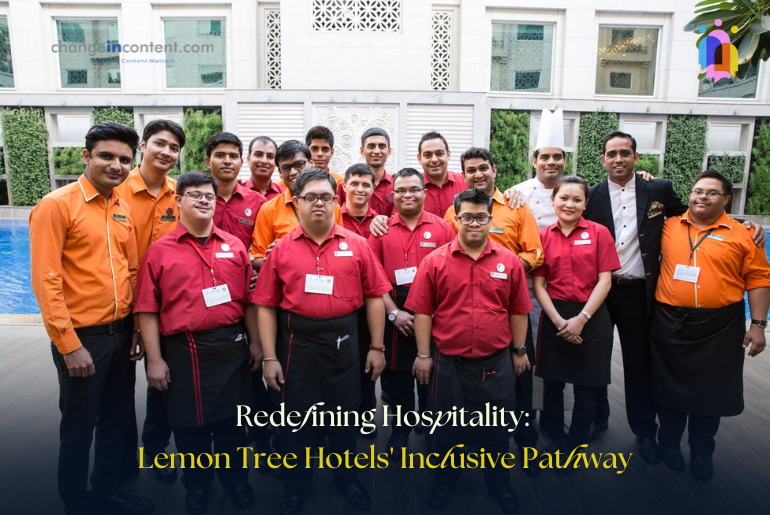
In the world of hospitality, where warmth and service take centre stage, inclusivity often lingers as a buzzword rather than a guiding principle. But Lemon Tree Hotels, an industry pioneer, has challenged this norm. With an ethos that bridges corporate excellence and social responsibility, they have woven inclusivity into the very fabric of their operations. Their groundbreaking initiatives are doing more than just changing the lives of those they hire. Lemon Tree Hotels are setting a gold standard for industries worldwide. As we unpack the story of inclusivity at Lemon Tree Hotels, we discover not just a business model but a philosophy that reimagines how companies can embrace diversity and equity while driving sustainable success.
People with disabilities (PwDs) represent over 15% of the global population, yet they remain one of the most underrepresented groups in the workforce. Lemon Tree Hotels’ initiative to employ and empower PwDs is not just about compliance. It shows a commitment to giving every individual the dignity of meaningful work and redefining workplace diversity.
A vision beyond hospitality: About Lemon Tree Hotels
Lemon Tree Hotels, headquartered in New Delhi, is one of India’s most prominent hospitality brands. With over 8,500 employees globally, the chain operates across diverse locations. They are delivering top-notch services. But what sets them apart is not just their hospitality—it is their unwavering commitment to inclusion.
Under the stewardship of Patanjali Govind Keswani, the visionary Chairman and Managing Director, the company has embraced inclusivity as a core principle. From hiring people with disabilities (PwD) to creating opportunities for individuals from marginalised communities, Lemon Tree Hotels has established itself as a trailblazer in the intersection of business and social impact.
Breaking barriers: Inclusive hiring at Lemon Tree Hotels
The Opportunity Deprived Indian (ODI) Initiative
At the heart of Lemon Tree’s inclusivity drive is the Opportunity Deprived Indian (ODI) Initiative. This program goes beyond tokenism. The hotel chain actively recruits individuals from marginalised backgrounds, including:
- People with Disabilities (PwD), such as those with hearing, visual, or speech impairments, autism, and orthopaedic handicaps.
- Economically and socially disadvantaged groups, including war widows, acid attack survivors, and individuals from Below Poverty Line (BPL) households.
This initiative goes beyond just hiring. Instead, it is about creating roles that leverage individual strengths and offering tailored training programs to enable these employees to thrive.
[penci_video url=”https://www.youtube.com/watch?v=vZE35FI3wxw&t=8s” align=”center” width=”720″ /]
A story of transformation
Keswani’s journey toward inclusivity began with a simple yet profound interaction. A mother of a disabled child once thanked him for giving her son a chance to lead a “normal life.” That heartfelt moment became the foundation of Lemon Tree’s inclusive hiring model. Starting with just 100 employees, the initiative has since scaled exponentially. PwDs now account for 12% of the workforce, with a target of reaching 20% by 2025.
Training and sensitisation: Building an inclusive workforce
Inclusivity at Lemon Tree Hotels doesn’t stop at recruitment. They understand that integration requires robust training and sensitisation efforts.
Tailored training programs for inclusivity at Lemon Tree Hotels
Lemon Tree collaborates with NGOs to design specialised training modules for differently-abled employees. These programs focus on skill-building while addressing the unique needs of PwDs. The aim is to ensure that people with disabilities excel in their roles.
Sensitisation for all
Creating an inclusive environment also means preparing the broader workforce. Lemon Tree conducts regular sensitisation workshops to ensure empathy and understanding among employees. These sessions help bridge gaps, dismantle prejudices, and establish a culture of mutual respect.
Inclusivity at Lemon Tree Hotels clubbed with economic sustainability
One of the most striking aspects of Lemon Tree’s inclusivity model is its alignment with economic sustainability. The organisation’s cost per employee is 70% of the industry average. They are achieving it through efficient role structuring and resource optimisation. Yet, despite being in the bottom 50% of salary structures, Lemon Tree boasts some of the highest engagement levels in the hospitality sector.
This balance of inclusivity and financial efficiency demonstrates that businesses can prioritise equity without compromising profitability.
Resilience in the face of adversity: Lessons from COVID-19
During the pandemic, Lemon Tree Hotels exemplified solidarity. Keswani and the top 10% of earners took significant pay cuts. They wanted to ensure that no one lost their jobs. This move underscored the company’s commitment to its workforce. It goes on to prove that inclusivity is not just a policy—it is a shared value that binds the organisation.
Inclusivity at Lemon Tree Hotels: Awards and recognition
Lemon Tree’s efforts have garnered widespread recognition:
- National Award for Empowerment of Persons with Disabilities by the Government of India.
- Numerous accolades for their customer satisfaction and brand impact.
These honours highlight not just their business acumen but also their dedication to driving societal change.
The way forward for inclusivity at Lemon Tree Hotels: A vision for 2025
Lemon Tree Hotels is not resting on its laurels. With plans to increase PwD representation to 20% by 2025 and expand their DEI initiatives globally, they continue to push boundaries. By setting an example, they are encouraging other organisations to follow suit. They are proving that inclusivity is not just a moral imperative—it is a business advantage.
The final thoughts
Inclusivity at Lemon Tree Hotels isn’t a side project; it’s a way of life. By integrating individuals from marginalised communities into their workforce, they have not only transformed lives but also redefined success in the hospitality industry.
At ChangeinContent, we believe stories like these need to be told. They remind us that inclusivity is about more than just representation. Instead, it is about creating opportunities, breaking down barriers, and creating a world where everyone can thrive. Lemon Tree Hotels has shown us the way, and now it is up to us to amplify their message and advocate for change across industries.
As we sip our morning tea in a Lemon Tree Hotel someday, let’s remember the hands that make it possible—hands that hold stories of courage, resilience, and transformation.
Disclaimer: The views expressed in this article are based on the writer’s insights, supported by data and resources available both online and offline, as applicable. Changeincontent.com is committed to promoting inclusivity across all forms of content, which we define broadly to include media, policies, law, and history—encompassing all elements that influence the lives of women and gender-queer individuals. Our goal is to promote understanding and advocate for comprehensive inclusivity.