
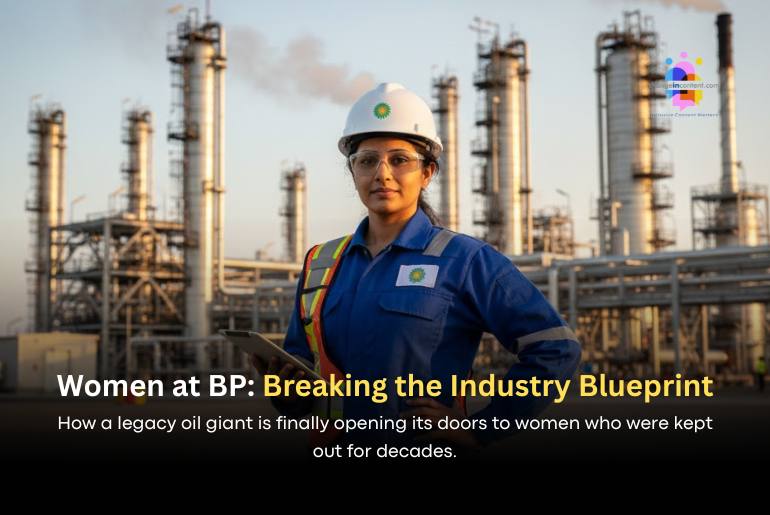
The story of Women at BP sits within a much larger, uncomfortable truth: oil, gas, and mining remain among the most unequal industries in the world. Decades of data show that energy companies still have significantly fewer women than men, especially in technical and leadership roles. Yet, while progress has been painfully slow across the global sector, a few organisations have started to push against the old norms.
BP is one of them. Over the past few years, it has tried to build a workplace that acknowledges its long-standing gender imbalance and actively works to fix it. From leadership representation to support systems designed for working women, BP’s journey is far from perfect. However, it gives us a closer look at what meaningful inclusion can look like in a sector that has resisted change for decades.
Making BP work for women
The oil, gas, and mining industries have always been dominated by men at every level. Among these sectors, the oil and gas industry is often seen as the least inclusive space for women. In fact, 2018 data from 29 countries shows that the energy sector has, on average, 76% fewer women than men. Only about 22% of oil company workers are women, and this figure drops even further when we look at high-paying technical roles.
Even so, the story is not entirely negative. There has been some progress. For example, in 2019, women made up about 15% of the global oil and gas workforce; now it is more than 22%, indicating a slow but steady rise. This change is happening because several major companies in the sector are now taking active steps to make their workplaces more inclusive. BP is one of those companies. It has launched diversity programmes, created better career paths for women to enter technical roles, and increased support systems inside the organisation.
About BP
BP PLC is a major British petrochemical corporation and one of the world’s largest oil companies. The company began on April 14, 1909, when it registered as the Anglo-Persian Oil Company Ltd. It later adopted the name British Petroleum Company PLC in 1982. BP entered a new phase in 1998 when it merged with Amoco. After the merger, it took the name BP Amoco. In 2000, the company shortened it to BP PLC.
In 2003, BP introduced the slogan “Beyond Petroleum.” Today, BP and its group of companies work across the whole oil and gas chain. They explore and produce oil and natural gas. They also refine, transport, and distribute these products. In addition, BP manufactures chemicals, plastics, and synthetic fibres.
Women at BP: The numbers behind the change
BP often stands out in an industry where men usually dominate. Women make up 39% of BP’s employees and 30% of senior leaders, and both numbers rose after the pandemic. This gives BP a better gender balance than most of its competitors.
In 2022, BP reached a significant milestone when more women than men joined its top executive group. The leadership team comprised six women and five men, making BP the first major oil company to reach this level of representation.
In 2016, the BP Portugal team already had more women than men and an equal number of men and women in leadership. This was rare for the energy sector at that time. By 2023, its Administrative Council had three women and one man, and the overall workforce also included a higher share of women.
BP aims to make even bigger changes by 2030 with a focus on a long-term inclusion plan. The company aims to have women hold half of its 400 leadership roles. It also wants women to make up 40% of employees at every other level.
Why women often do not make it in oil and gas
There is no shortage of women who want to work in the oil and gas industry. The real problem comes from limited visibility, fewer chances to grow, and workplaces that do not support their progress. In this sector, women hold only about 10% of technical and operational jobs, no matter the level of seniority. Many women move into management in non-technical roles, yet very few reach the C-suite.
A 2021 International Energy Agency study shows how serious the situation is. According to the report, only 5% of senior leaders in oil and gas are women. There is a steep drop between junior and senior management. The study also found that the number of women in business roles falls by nearly 50% from mid-career to higher ranks. Many move to other industries because their employers do not create supportive and inclusive workplaces.
India faces the same issue. Oil and gas companies in the country have some of the lowest levels of women’s representation. Construction and oil and gas each have only 2% women in their workforce. Even related sectors like power show a 3% increase.
The gender roadblocks in oil and gas careers
Many things contribute to this situation. In many companies, women end up in office-based or support roles, while men move into technical roles or leadership positions. Traditional ideas about what kind of work women “should” do also play a role, influencing hiring and promotion decisions. Field jobs often involve travel, long hours, or harsh conditions, and companies rarely offer enough support to make these roles easier for women to take on.
Another issue comes from hiring practices. Several firms still do not run programmes to attract and train women for specialised roles. Because of this, fewer women enter technical teams in the first place, and even fewer stay long enough to grow into senior positions.
Women at BP: The support systems behind the progress
BP places strong attention on flexibility, wellbeing, and training so employees can grow in their jobs and manage their lives outside the workplace. The company runs several internal networks that help women build stronger careers and handle responsibilities at home.
Women’s International Network
One of the key groups is the Women’s International Network. This network supports women across BP by offering mentorship, skill-building sessions, and career-planning guidance. It encourages women to take on new roles, seek promotions, and build long-term careers in an industry where men usually dominate senior positions. The BP national and regional partnerships provided coaching and mentoring to over 80 women’s business enterprises and 25 minority enterprises. The group also creates spaces where women can share experiences and find support from peers and leaders.
Working Families Network
BP also runs the Working Families Network, which helps employees who take care of children, older parents, or family members with health needs. This support matters even more for women, who often manage most caregiving duties at home. The network helps them balance work and family life without feeling they must choose one over the other.
Services That Make Daily Life Easier
To make daily routines easier, BP offers practical services at some sites. These include on-site childcare centres, known as creches, and health insurance for employees’ parents. These steps help women stay in the workforce during demanding phases of their lives and reduce the pressure that pushes many out of technical and leadership roles.
Together, these programmes show how BP tries to create a workplace where women can stay, grow, and lead.
Women at BP: The final thoughts
The oil and gas industry still excludes far too many women, especially from technical and senior roles. Yet change is possible when companies take responsibility for it. BP’s efforts show what progress can look like when leadership, policies, and culture move in the same direction. More companies must follow this lead.
Women deserve equal opportunities to enter, advance, and succeed in the oil and gas industry. With focused action, transparent goals, and workplaces that support their growth, the sector can move closer to a future where women no longer remain on the margins but shape the industry at every level.
Changeincontent perspective
For years, inclusion in oil and gas has been treated as an afterthought. That is something to mention in annual reports, while the real decisions stayed firmly in male hands. BP’s progress shows what can happen when a company stops treating representation like a checkbox and starts treating it like a strategy. But one company cannot carry the weight of an entire industry.
Real change will only come when the sector accepts that gender imbalance is not a natural outcome of “tough jobs.” Instead, it is a manufactured barrier that can be dismantled. Until then, women in energy will continue to push forward, often without the systemic support they deserve.
Also Read: Women in the Oil & Gas Industry.
Disclaimer: The views expressed in this article are based on the writer’s insights, supported by data and resources available both online and offline, as applicable. Changeincontent.com is committed to promoting inclusivity across all forms of content. We broadly define inclusivity as media, policies, law, and history. It encompasses all elements that influence the lives of women and marginalised individuals. Our goal is to promote understanding and advocate for comprehensive inclusivity.
