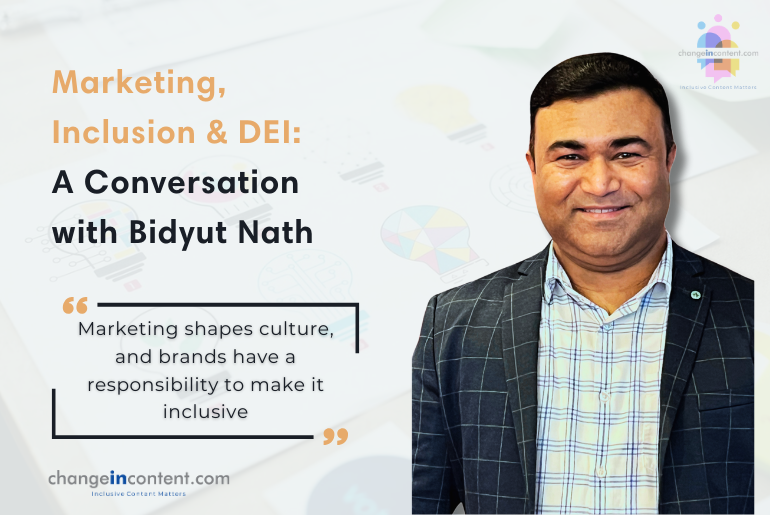
In a free-flowing conversation with Bidyut Nath, Head of Digital Marketing & Branding at Rupa and Company Limited, we dive deep into the evolving landscape of marketing, gender representation, and inclusive communication. With over two decades of experience in brand strategy and integrated marketing communications, Bidyut has played a pivotal role in redefining narratives and steering brands towards more meaningful engagement. From breaking gender stereotypes in advertising to addressing workplace diversity, his insights offer a compelling look at the responsibilities of modern brands in shaping cultural conversations.
Visionary leadership of Bidyut Nath
With a career spanning over 20 years in brand strategy, public relations, and digital marketing, Bidyut Nath is a name that resonates with expertise and innovation in the marketing landscape. As the Head of Digital Marketing and branding at Rupa and Company Limited, he has been instrumental in enhancing brand visibility, market penetration, and inclusive communication strategies. A Master of Mass Communication from Assam University, Bidyut has shaped consumer perceptions through transformative storytelling. He is leading campaigns that challenge traditional norms and redefine engagement in the digital age.
Rethinking masculinity in advertising: Bidyut Nath on inclusive brand communication
Advertising has long been a powerful force in shaping gender narratives. But is it time to rethink masculinity and inclusivity in marketing?
Q: What role do you think the men’s fashion industry, especially in the innerwear category, plays in perpetuating sexism and misogyny, particularly in terms of communication and depiction in advertisements?
A: Traditionally, category leaders in the innerwear industry have created ads based on masculine ideals. It was the norm. However, a shift is underway. New-age influencers and bloggers are redefining narratives and promoting more inclusive representations of gender roles.
The rise of couple-centric products has also contributed to a more inclusive communication approach. While there’s still room for growth, it’s heartening to see a gradual increase in sensitivity towards all genders. As we continue to evolve, it’s essential to acknowledge and celebrate this progress, paving the way for a more inclusive and equitable future.
Q: What strides have been made in promoting body positivity and diversity in advertising for men’s innerwear and loungewear? How can brands better represent diverse body types, ages, abilities, and ethnicities in their marketing efforts, and what impact can this have on challenging traditional notions of masculinity and promoting inclusivity?
A: We are a pioneer in bridging the gap between men’s and women’s sensibilities. Traditionally, men and women look at colours differently. Rupa’s Colors collection for men is a collection that debunks the thought that men are not experimental.
We’re breaking away from the traditional black, grey, and muted shades and launching a vibrant palette of 80 colours—shocking pink, bright yellow, neon blue, and many more. Plus, we’re offering a range of sizes to cater to different body types.
The youth is driving this change, and it’s fascinating to see how the conversation around innerwear is evolving. ‘Bedroom talk’ is becoming more open and honest, and we’re proud to be part of this shift.
We don’t believe that gender is simply governed by sex. By incorporating elements of femininity into our designs, we acknowledge that men’s identities are complex and multifaceted. It’s time to move beyond traditional masculine norms and celebrate individuality. Language and narratives are evolving, and we’re excited to be at the forefront of this change.
Consumer behaviour & gender dynamics: Bidyut Nath on evolving market trends
How are evolving gender roles influencing consumer behaviour? And how is the rise of digital commerce changing purchasing decisions?
Q: As women’s education and agency increase, how do you think their influence on household purchasing decisions, particularly for innerwear, is changing? Are there notable differences in consumer behaviour between ‘Bharat’ (rural/semi-urban areas) and ‘India’ (urban/metropolitan areas) in this regard?
A: The rise of quick commerce has transformed the purchasing landscape, making innerwear buys more regular and frequent, beyond just occasion-based purchases. With increasing women’s education and openness in gender conversations, including ‘bedroom talk,’ men are more empowered to express their preferences.
Interestingly, women are now taking the lead in most purchases, opting for innovative, colourful, and playful products. This trend is also reflected in content consumption, where women often influence what’s watched at home. While there are differences in consumer behaviour between India and Bharat, one common thread is the increased agency among women consumers, driving purchasing decisions and shaping market trends.
Not only are women driving purchasing decisions, but men are also taking a keener interest in their appearance, wanting to be attractive to their partners. This shift suggests that men are becoming more invested in their personal style and grooming beyond traditional norms.
Q: Does the rise in couples’ underwear reflect increased female agency and decision-making power in relationships, or do other factors drive it?
A: Traditionally, women have often taken the lead in dressing family members in coordinating outfits, especially on special occasions. However, men have historically been less involved in such decisions.
Now, with women feeling more empowered to express their opinions, they’re increasingly influencing their partner’s choices, even down to the details of what they wear in private moments. This shift has likely contributed to the growing trend of couples’ underwear, with women driving the desire for matching or coordinating sets.
Women in the workplace: Bidyut Nath on breaking gender barriers
Despite progress, women in corporate India still face systemic barriers. What needs to change?
Q: We are shifting gears here and discussing workplace gender dynamics. Do you feel that there has been a certain lack of women professionals in our industry, especially in the last decade?
A: I don’t think women are falling behind in the media and advertising industry. In my personal experience, I have seen a significant shift in recent years. Earlier, it was common to see only one or two women in a pool of ten candidates, but now I’m witnessing more capable women step forward.
Women who are educated, driven, and focused are extremely capable as team members and managers. They bring a unique value system, integrity, and honesty to their work, which is invaluable to our industry. Contrary to some data that may suggest otherwise, I am optimistic about the progress we are making in the media and advertising industry. The change is palpable, and I’m excited to see more women taking on leadership roles and making a meaningful impact.
Women have historically excelled at managing families and households. This 24/7 job demands exceptional organisational skills, multitasking, and adaptability. When women bring their authentic selves to work, they perform remarkably well.
However, societal constructs and family expectations often hinder women’s progress. Despite the increasing number of women in senior leadership roles and achieving academic excellence, India still faces challenges such as:
- Marriage and family pressures
- Limited travel opportunities
- Safety concerns
- Lack of infrastructure
These structural barriers, combined with mental and emotional conditioning, age-old repression, and societal expectations, prevent women from reaching their full potential.
Q: That’s a great point. However, what are some of the challenges that women still face in India, particularly in the workplace?
A: Despite the increasing number of women in senior leadership roles and achieving academic excellence, India still faces challenges such as marriage and family pressures, limited travel opportunities, safety concerns, and lack of infrastructure. These structural barriers, combined with mental and emotional conditioning, age-old repression, and societal expectations, prevent women from reaching their full potential.
Q: That’s an interesting point. How do you think women’s historical roles in managing family responsibilities influence their approach to work?
A: Women’s experience in handling family constructs makes them more responsible, not just towards their families but also in their professional lives. As a result, when women work, they tend to be more productive and accountable in their approach.
Q: What role does technology play in helping women actualise their potential?
A: Technology has been a game-changer for women. The earlier notion that women aren’t good with technology is fading away. With the IT sector opening up, we’ll see more women joining the workforce. Women bring unique skill sets to the table, such as attention to detail, conflict management, and organisational skills, which they’ve honed from managing households. Interestingly, households can be seen as microcosms of workplaces, so these skills are highly transferable. As technology continues to advance, it will provide more opportunities for women to upskill and reskill, ultimately helping them actualise their potential.
Q: What drives women to be more productive and responsible in their professional lives?
A: Many women in the workforce are first—or second-generation employees, which motivates them to prove themselves capable and driven professionals. Additionally, women’s historical roles in managing family responsibilities make them more responsible, not just towards their families but also in their professional lives. As a result, when women work, they tend to be more productive and accountable in their approach.
Q: You have worked with various organisations, and I’m sure you’ve seen the silos and power centres that exist within them. How can we break down these barriers, especially the “boys’ club” mentality that often excludes women?
A: It all boils down to the organisational culture. How do you mentor women? How do you create equal opportunities at work? It, in turn, shapes the way we use language and handle politics. Historically, women have been excluded from these power centres, but it can change. By actively recruiting more women, you can create a shift.
If you balance a team of four people with more women, the men in the team start behaving differently, using more inclusive language. It is not just about hiring more women; it is also about retaining them and providing better leadership opportunities. Creating inclusive language is a natural outcome of this process.
The road ahead: Bidyut Nath on diversity & inclusion in Indian business
As Indian businesses evolve, how can they create meaningful DEI initiatives that go beyond tokenism?
Q: What’s your outlook on Diversity and Inclusion (DI) in India, particularly in family-owned businesses?
A: For family-run businesses, the second or third generation often brings about significant change. However, due to the family’s involvement, incorporating larger value systems can be challenging. It doesn’t mean there’s a lack of intent but rather a structural limitation. On the other hand, large corporates like Infosys, HUL, and Axis are setting a positive example. New startups and unicorns can also be flag bearers for DI.
In Bharat and India, mindsets still assume women won’t stay in the workplace for long due to motherhood and family responsibilities. Women must break these barriers by leveraging their education and job opportunities to play an equal role in changing the narrative.
While women bear the brunt of systemic damage and repression, those who have opportunities must be vocal and take charge. The gap will only increase if larger organisations and new-age companies don’t prioritise DEI.
Q: India seems to be revisiting its traditional value systems, as evident in the rising popularity of figures like Mahakumbh and IIT Baba. How can we draw inspiration from our traditions to promote diversity and inclusion?
A: Our traditions offer valuable lessons. Take Mahadev, for instance. The concept of Ardhanareshwara shows the importance of balance and unity between masculine and feminine energies. Similarly, when we think of wealth and peace, we invoke Lakshmi and Narayan, with Lakshmi’s name often preceding Narayan’s. This subtle nuance highlights the significance of feminine energy in our traditions.
Historically, India has seen women leaders like Rani Lakshmibai and Razia Sultan, who may not have always been successful but left an indelible mark. Women have also played a crucial role in shaping our scriptures and philosophical thought.
If we draw inspiration from our past and present, we can create a more inclusive future. For instance, the Northeast region offers a unique example of women’s empowerment. Women play a vital role in commerce, household management, and decision-making. By embracing this diversity, we can work towards a more balanced and harmonious society.
In its entirety, our tradition and cultural heritage offer enough and more Diversity, Equity, and Inclusion (DEI) principles. So, why not take inspiration from there and look at changing the world?
Conclusion: Bringing difficult conversations to the fore
At Changeincontent.com, we strive to initiate meaningful discussions that often go unexplored in the trade space. Our conversation with Bidyut Nath was a testament to this endeavour, covering Diversity, Equity, and Inclusion (DEI), the importance of representation, and the need to dismantle traditional power structures.
Bidyut’s insights reaffirm the importance of creating equitable workplaces, evolving marketing narratives, and challenging the status quo. His appreciation of Changeincontent’s mission to drive such conversations fuels our commitment to bringing critical industry topics to the forefront.
A heartfelt thank you to Bidyut Nath for his thought leadership and to Rupa and Company Limited for supporting forward-thinking initiatives in branding and inclusion.
Disclaimer: The views expressed in this article are based on the writer’s insights, supported by data and resources available both online and offline, as applicable. Changeincontent.com is committed to promoting inclusivity across all forms of content. We broadly define inclusivity as media, policies, law, and history—encompassing all elements that influence the lives of women and gender-queer individuals. Our goal is to promote understanding and advocate for comprehensive inclusivity.