The Quick Read
- PMNCH launches Global Campaign, titled Lives in Balance: Finance the Promise, as health aid records its steepest annual fall.
- Official development assistance for health declined by 23.1% in 2025. A further 5.8% fall is projected for 2026.
- The campaign will initially support domestic health financing in Malawi, Nigeria, Senegal, Tanzania and Zambia before expanding to ten countries.
- 8It will also push donors and global institutions to protect funding through Gavi, the Global Fund, the World Bank and the Global Financing Facility.
- The announcement follows evidence that aid cuts have already reduced essential support for at least one million women and girls in humanitarian settings.
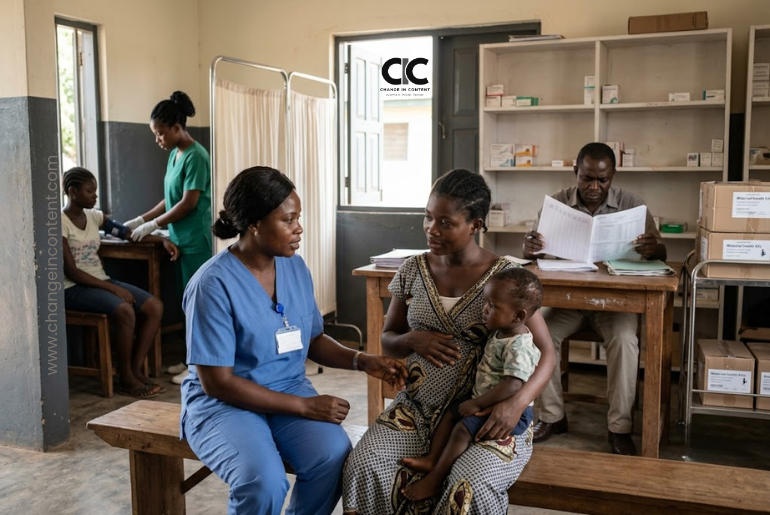
Global health aid is shrinking just as essential services for women, children and adolescents are coming under greater pressure.
Against this backdrop, PMNCH launches Global Campaign Lives in Balance: Finance the Promise, a two-year initiative intended to protect international health assistance and help countries build stronger domestic funding systems.
The Partnership for Maternal, Newborn & Child Health, or PMNCH, announced the campaign in Geneva on 21 July 2026. It will focus on reproductive and maternal healthcare, newborn and child health, family planning and adolescent services. These are often among the first programmes to lose money when donors reduce grants or withdraw support.
PMNCH launches global campaign: Why now?
Official development assistance for health fell by 23.1% in 2025, which PMNCH described as the steepest single-year decline since records began. Funding is projected to fall by another 5.8% in 2026.
Overall development assistance for health could decline by between 29% and 46% from 2024 to 2026. That would remove an estimated US$5 billion to US$8 billion from global health financing. The consequences are already visible.
A PMNCH survey of partner organisations across more than 20 countries in Africa, Latin America and South-East Asia found that 89% had experienced funding reductions by late 2025. Several had reduced or suspended frontline services.
The warning follows a wider humanitarian funding crisis. A recent UN Women report found that at least one million women and girls had lost access to critical support since January 2025 as women-led organisations reduced services or faced closure.
Change in Content reported on the impact of global aid cuts on one million women and girls, including the loss of safe spaces, services for survivors of violence and assistance for displaced women.
The PMNCH campaign now addresses another part of the same crisis: the weakening of health systems on which women, mothers, children and adolescents depend.
How will the campaign work?
The campaign has two main tracks.
The first will help countries increase and manage their own health spending. PMNCH will initially work with national partners in:
- Malawi
- Nigeria
- Senegal
- Tanzania
- Zambia
The programme is expected to expand to ten countries.
Support will include health-budget analysis, assessment of financing needs, engagement with parliamentarians, public advocacy and tracking how allocated money is spent. Countries will also exchange lessons on improving domestic financing.
The second track will focus on protecting international assistance.
PMNCH will advocate for funding through the Global Fund’s next grant cycle, Gavi, the World Bank, the Global Financing Facility and debt-relief arrangements that give governments more room to spend on health.
The campaign therefore does not present domestic financing and foreign aid as competing choices.
It argues that countries need stronger and more accountable health budgets, but international support cannot disappear before national systems are capable of replacing it.
Why are women’s and children’s health services particularly vulnerable?
Maternal care, contraception, safe childbirth, newborn services and adolescent health programmes have often remained underfunded even before the latest cuts.
The global need remains considerable:
- A woman dies from causes related to pregnancy or childbirth every two minutes.
- Around 4.9 million children died before reaching the age of five in 2024.
- Twelve million adolescent girls give birth every year.
- Pregnancy and childbirth complications remain a leading cause of death among girls aged 15 to 19.
When health funding contracts, the damage is not limited to fewer programmes on a budget sheet.
A closed clinic can mean a longer journey for antenatal care. A shortage of contraceptives can increase unintended pregnancies. Reduced community outreach can leave complications undetected. Fewer trained health workers can make childbirth more dangerous.
The shortage of personnel is already severe. Change in Content recently examined why the world needs one million more midwives to meet maternal, reproductive, newborn and adolescent health needs.
Health emergencies can deepen the pressure. The experience of the Ebola outbreak and women caregivers shows how women frequently face heightened exposure because they work as nurses, birth attendants, community health workers and unpaid family caregivers.
The financing case extends beyond healthcare
PMNCH argues that investment in these services produces substantial social and economic returns.
According to the campaign announcement, every US$1 invested in reproductive, maternal, newborn and child health can generate up to US$20 in economic and social value. Closing gaps in women’s health could add at least US$1 trillion annually to the global economy by 2040.
Debt, however, is limiting what many governments can spend.
More than three billion people live in countries that spend more on debt servicing than on health or education. African governments repaid an estimated US$89 billion in debt during 2025, while more than 30 countries on the continent spent more on debt than on health.
PMNCH says greater efficiency can recover part of this lost capacity. For example, pooled procurement by the Africa Centres for Disease Control and Prevention has reportedly reduced prices by as much as 90% for ten priority maternal and newborn health products.
The Change Ahead
The PMNCH campaign arrives as global health financing faces two pressures at once.
Donor support is falling, while many lower-income countries lack the fiscal space to replace it immediately.
Building stronger domestic financing is necessary. So is ensuring that the transition does not close clinics, interrupt family-planning services or remove skilled care from women during pregnancy and childbirth.
Budgets rather than declarations will ultimately judge the campaign: how much money countries mobilise, whether donor commitments survive and whether funds reach frontline health services.
A funding cut may begin as a decision in a finance ministry. Its final effect can be a woman arriving at a clinic and finding that the care she needs is no longer there.
Editorial Note and Sources
This Bureau report is based on the official PMNCH campaign announcement published on 21 July 2026 and related PMNCH material on the global health-financing crisis. Funding projections and estimates reflect information available at the time of publication and may change as governments and development institutions revise their budgets. This article is for public-policy information and does not constitute medical, financial or development-funding advice.
Principal sources
- PMNCH: PMNCH launches Global Campaign to finance women’s, children’s and adolescents’ health.
- PMNCH: As Aid Collapses and Crises Multiply, Women, Children and Adolescents Risk Being Written Out of Global Health Reform.
- PMNCH: Investing in Women’s, Children’s and Adolescents’ Health and SRHR: A Strategic Priority for the G7.