
The Quick Read
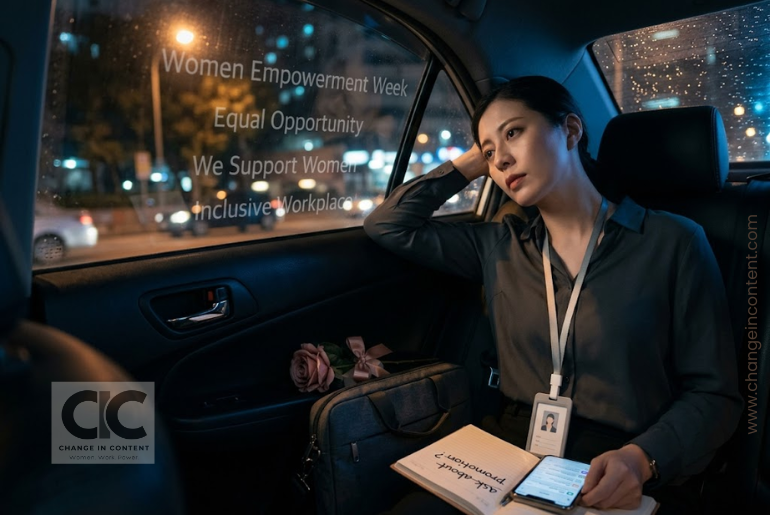
- Genderwashing is the gap between an organisation’s equality language and the reality women experience inside it.
- Scholars have described the term as a way in which organisations present the myth of gender equality through discourse and text, often protecting their reputation more than changing power.
- Genderwashing can show up in Women’s Day campaigns, diversity reports, hiring posts, leadership speeches, HR policies, employer branding and “women empowerment” messaging.
- It is not the same as imperfect progress. A company can be genuinely trying and still have gaps. Genderwashing begins when image replaces accountability.
- Recent research on gender washing in organisations links it to superficial promotion of gender equity while discriminatory structures continue, especially around pay and HR communication.
- The cure is not silence. It is proof. Pay data, promotion data, safe reporting systems, fair flexibility, visible sponsorship, leadership accountability and women being heard without being punished.
Genderwashing begins with the sentence that women are expected to believe
“We are an equal opportunity employer.” Good sentence. Now look around.
- Who speaks in meetings?
- Who gets interrupted?
- Who travels late for work?
- Who organises the office birthday cake?
- Who is asked about marriage plans?
- Who gets the stretch assignment?
- Who returns from maternity leave to a smaller role?
- Who is described as “aggressive” for saying what a man said five minutes earlier?
- Who appears in the Women’s Day video?
- Who appears in the succession plan?
That is where genderwashing starts to become visible.
It does not always look like a lie. Often, it looks like a polished half-truth. A workplace says the right thing. The poster is beautiful. The campaign is emotional. Yes, the policy exists. The leader knows the vocabulary. And the annual report has the right photographs.
But the everyday experience tells another story.
Women still carry more invisible labour. Women still wait longer for serious sponsorship. The organisation subtly asks women to prove ambition after motherhood. They still face pay gaps, promotion gaps and respect gaps. Women still hear that “this is just how the organisation works”.
Genderwashing is the space between the promise and the pattern.
What does genderwashing actually mean?
The academic paper Genderwashing: The Myth of Equality describes genderwashing as an organisational tool that presents the myth of gender equality through discourse and text. It argues that genderwashing can be driven by economic and reputational motives, sometimes at the cost of employee well-being.
Put simply, genderwashing is what happens when equality becomes language before it becomes life.
It is not only about ads. Nor is it just about PR. And it is not only about one bad Women’s Day post.
It can sit inside HR manuals, leadership speeches, ESG reports, diversity dashboards, recruitment campaigns, award submissions, conference panels and internal emails.
- A company may say women are valued. The promotion data may say otherwise.
- A company may celebrate working mothers. Returning mothers may quietly lose visibility.
- A company may announce mentorship for women. Men may still receive the real sponsors.
- A company may publish a photo of women leaders. Those women may be the exception used to hide the rule.
That is genderwashing. A workplace may not be free of gender bias just because it has learned to speak the language of equality.
Genderwashing is not the same as trying and failing
Now this is an important argument. Not every company with a gender gap is genderwashing.
A workplace can be honestly trying. It can publish imperfect data, admit where it is behind, ask difficult questions, test solutions and improve over time. That is not genderwashing. Instead, that is work in progress.
Genderwashing begins when the performance becomes louder than the repair. It begins when a company seeks credit for equality without changing the systems that sustain inequality. It begins when leaders say “women are empowered here”, but women who raise pay, harassment, bias or workload concerns are treated as difficult. And it begins when the organisation protects its image more quickly than it protects its people.
Why genderwashing feels so familiar to women
Many women may not use the word genderwashing. But they know the feeling.
- They see the Women’s Day email praising women’s strength, then return to a team where late-night availability decides who is “leadership material”.
- They sit through a session on bias, then watch the same men get the high-visibility projects.
- They are told the company supports mothers, then hear colleagues whisper that a pregnant employee is “not serious about growth right now”.
- They are asked to join the diversity committee, but not the business strategy meeting.
- They are photographed for the brochure, then ignored in the promotion conversation.
- They are told to speak up, then labelled negative when they do.
That is why genderwashing can feel close to gaslighting. The official language says one thing, but the body knows another. And the woman starts wondering whether she is being unreasonable.
In healthcare, women often face dismissal of their pain and judgement of their credibility. The same emotional pattern can appear at work when women’s lived reality is repeatedly denied. That is why the conversation around medical gaslighting and healthcare bias against women also helps us understand workplace disbelief.
The common thread is simple: women are told their experience is not evidence.
The most common forms of Genderwashing
For all the women at work, this is where it gets real for you without even realising.
1. The Women’s Day wash
This is the most visible form. Flowers. Cupcakes. Pink posters. “You are strong” messages. A video montage, a panel with three women and no budget, and maybe a discount code.
Then life continues. No pay audit, no promotion review, no childcare conversation, no accountability for harassment, no flexibility reform, no manager training, no serious returnship, and no tracking of who gets visible work.
The problem is not celebration. Women deserve celebration. The problem is celebration without correction.
A Women’s Day campaign should not become a mask over women’s everyday workplace reality.
2. The “we have women leaders” wash
One senior woman is often made to carry the reputation of the whole organisation.
Look, we have a woman CFO. Oh, our HR head is a woman. Look, our board has women. Look, our India leader is a woman.
Good. Representation matters. But one woman at the top does not prove equality. It may prove that one woman survived the system. Ask the next question.
- How many women are in the pipeline?
- How many lead revenue roles?
- How many hold P&L responsibility?
- How many get promoted after maternity?
- How many women leave at mid-career?
- How many women from marginalised backgrounds reach leadership?
A photograph of success should not be used to hide the absence of scale.
3. The policy wash
This one looks very official. And most working women would relate to this.
The company has a POSH policy. It has maternity leave, flexible work, an equal opportunity language, and an anti-discrimination statement.
All useful. But policy is not culture until people can use it safely.
- Can a woman report harassment without retaliation?
- Can a father take parental leave without being mocked?
- Can a mother use flexibility without losing promotion chances?
- Can a woman challenge pay without being marked as “not a team player”?
- Can an employee ask for accommodation without being treated as a burden?
A policy that cannot be used without fear is part of the wash.
4. The recruitment wash
It is equally important to talk about recruitment, as genderwashing appears in hiring campaigns.
“Women in tech wanted.”
“Diversity hiring drive.”
“Returnship for women.”
“Inclusive workplace.”
“Come as you are.”
Then the interview panel asks women whether they can travel late, whether they will marry soon, whether childcare will be a problem, whether their husbands support their careers, and whether a career break has made them rusty.
The job description says inclusive. The interview says old world. That is genderwashing at the door.
5. The flexibility wash
Many companies now advertise flexibility. Hybrid work. Remote work. Flexible hours. Work from anywhere.
Then employees learn the hidden rule. Flexible workers are not promoted as quickly. Women using flexibility are seen as less committed. Mothers become invisible. Managers reward the people who can stay late or appear online all day.
Flexibility that protects work but punishes the worker is not inclusion. It is branding.
This connects directly to the reality of work-life balance for contemporary women. Women do not need decorative flexibility. They need flexibility that does not reduce trust, pay, visibility or growth.
6. The mentorship wash
Mentorship is often the safe corporate answer to gender inequality.
Let us mentor women. Let us build confidence. And let us help them lean in.
Mentorship can help. But mentorship alone can also become a polite delay.
Many women do not need more advice. They need sponsors. They need someone to mention their name in closed rooms. At the same time, they need access to high-value work. They need stretch assignments. They need promotion support. And they need a salary correction.
McKinsey and LeanIn.Org’s 2025 report says women are held back by less sponsorship and manager advocacy; when women receive the same career support as men, the ambition gap in advancing narrows.
If men get sponsorship and women get confidence workshops, the workplace is washing the problem.
7. The language wash
Language can do real work. It can also hide real work.
A company may replace “diversity” with “belonging”. It may say “people-first”. It may talk about “human potential”, “inclusive excellence”, “respectful culture” and “equitable growth”.
The words are not wrong. But words become genderwashing when they make inequality sound solved before it is addressed.
That is why language matters. Words decide what is named and what is softened. They can reveal bias or protect it. In a different but related way, the words we throw at women shape how women are judged at work and outside it.
A workplace that calls women “emotional”, “bossy”, ” difficult”, “too ambitious”, or “not flexible enough” cannot wash itself clean with “empowerment” language.
8. The award wash
Awards can recognise good work. They can also create a shortcut to reputation.
“Best workplace for women.”
“Top employer for diversity.”
“Most inclusive company.”
“Champion of gender equality.”
Fine. But who checked the lived experience?
Awards become genderwashing when companies use them as proof while employees still face pay gaps, silence, harassment, retaliation, bias and blocked growth.
The question is not whether the award exists. The question is whether women inside the company recognise the company described in the award.
Why do organisations genderwash?
Genderwashing is not always planned by one villain in a boardroom. Sometimes it is strategic. Sometimes it is careless. And sometimes it grows out of fear, habit or brand pressure.
Organisations genderwash because equality language is valuable.
- It helps attract talent.
- It pleases investors.
- It improves employer branding.
- It supports ESG storytelling.
- It helps leaders sound modern.
- It reduces public criticism.
- It gives customers a reason to feel good.
- It can make regulators, partners and employees believe progress is stronger than it is.
The research on genderwashing argues that organisational rhetoric can preserve the myth of equality while structural and cultural practices continue to produce discrimination. A more recent study on gender washing in organisations describes it as a practice where organisations superficially promote gender equity. At the same time, discriminatory structures remain, particularly through HR texts and discourse around pay inequity.
That is why genderwashing is powerful. It does not deny equality. It uses equality.
How women can spot genderwashing at work
Here is a practical test. Do not only ask what the organisation says. Ask what the organisation repeats.
The poster says women are empowered. What does the promotion list say? If women appear in campaigns but not in leadership pipelines, look closer.
The company says it supports mothers. What happens after maternity leave? If women return to smaller roles, lower visibility or softer assignments, the support is thin.
The policy says zero tolerance. What happened the last time someone complained? If everyone knows reporting is risky, the policy is performing.
The company says flexibility is available. Who actually uses it? If only women use flexibility and then lose growth, the system is biased.
The leader says women must speak up. What happens when they do? If speaking up brings labels, silence is being managed.
The company says it believes in pay equity. Has it measured the pay gap? If there is no audit, no transparency and no correction plan, belief is not enough.
The company says it is inclusive. Who leaves quietly? Exit patterns often reveal what culture hides.
How organisations can stop genderwashing
The answer is not to stop talking about gender equality. Silence helps no one. The answer is to make the talk accountable.
1. Publish meaningful data
Track women by level, function, pay, promotion rate, attrition, hiring source, career break return, flexibility use and leadership pipeline.
Do not hide behind overall percentages. A company can have many women in entry-level or support roles and very few in decision-making positions.
2. Audit pay and promotions
Pay equity cannot depend on confidence or negotiation alone. Promotion equity cannot depend on informal sponsorship.
Measure gaps. Explain them. Fix them.
3. Make flexibility career-safe
Flexible work should not become a slower track for women. Track promotion and performance outcomes for employees who use flexibility.
4. Protect women who report harm
A workplace that punishes complaints is not equal, no matter what its website says.
Complaint systems need independence, confidentiality, speed, fairness and protection against retaliation.
5. Move women into power roles
Do not celebrate women only in HR, communications or culture roles. Track women in business, revenue, technology, operations, finance, strategy and board pipelines.
6. Replace symbolic mentorship with sponsorship
Mentorship is advice. Sponsorship is access.
Women need both. Too often, they receive only the safer one.
7. Listen without punishing
If women keep raising the same issues, the organisation should not call them negative. It should ask why the issue has survived so long.
8. Fund the work
Gender equality without a budget is often theatre.
Childcare support, safe transport, returnships, audits, leadership training, grievance systems, accessibility, manager capability, and pay corrections cost money. So does attrition.
Why genderwashing is dangerous
Genderwashing hurts because it steals the language of change.
When equality language is used without equality work, women face a double burden. First, they experience bias. Then they are told the organisation is already fair. That makes resistance harder.
- If the company says it is inclusive, the woman who points out exclusion becomes the problem.
- If the report says women are thriving, the woman who is not thriving feels alone.
- And if the leader says everyone has equal opportunity, the woman who cannot access opportunity appears ungrateful.
This is how genderwashing protects the organisation and isolates the individual. It turns structural problems into personal discomfort. It makes women doubt their reading of the room.
The Change in Content View
Genderwashing is not a small communications mistake.
It is a power move, even when it is done politely. It allows organisations to borrow the moral value of equality without paying the full cost of change. Genderwashing also gives them the glow of progress while women continue to manage bias, silence, unpaid emotional labour, stalled growth and unsafe systems.
The point is not to attack every organisation that speaks about women. We need organisations to speak. At the same time, we need them to make commitments. We need them to celebrate progress. We need them to build language for equality.
But the language must walk into the workplace. It must enter pay reviews, promotion rooms, hiring panels, complaint systems, meeting culture, leadership pipelines, flexibility norms and everyday respect.
The future of gender equality at work will not be decided by the best Women’s Day post. It will be decided by what happens on 9 March. And 10 March. And every ordinary day after the campaign has ended.
That is where genderwashing is exposed. That is also where real change begins.
FAQs
Q: What is Genderwashing?
A: Genderwashing is when an organisation presents itself as gender-equal or women-friendly through language, campaigns, policies or reports, while women’s actual workplace experience still reflects bias, inequality or exclusion.
Q: What is an example of Genderwashing?
A: A company may celebrate women on Women’s Day while having no pay audit, no women in serious leadership pipelines, weak harassment systems, and a culture where mothers or women using flexibility lose career visibility.
Q: Is Genderwashing always intentional?
A: Not always. Some organisations deliberately use equality messaging to enhance their reputation. Others may genderwash because they are careless, unaware or more focused on branding than structural change. The impact still matters.
Q: How can employees identify Genderwashing?
A: Look for gaps between words and patterns. Check who gets promoted, who leaves, who is heard, who gets flexibility without penalty, who has access to sponsorship, and whether complaints are handled safely.
Q: How can organisations avoid Genderwashing?
A: Organisations can avoid genderwashing by publishing meaningful data, auditing pay and promotions, protecting complainants, funding gender equality work, making flexibility career-safe, improving sponsorship and acting on women’s lived experiences.
Editorial Note and Sources
This article draws on academic work on genderwashing, genderwashing in organisations, women’s workplace advancement, and business guidance on gender equality. It interprets the concept through the Change in Content lens of women, work, language and organisational power. The article is intended for editorial and informational purposes only and should not be read as legal, HR compliance, employment, mental health or workplace advisory guidance.
Sources used:
- Fox-Kirk, Gardiner, Finn and Chisholm: Genderwashing: The Myth of Equality, Human Resource Development International.
- Burke and Imas: Hung Out to Dry: Gender Washing in Organisations, Gender, Work & Organisation.
- UN Women and UN Global Compact: Women’s Empowerment Principles.
- McKinsey and LeanIn.Org: Women in the Workplace 2025.
- World Economic Forum: Global Gender Gap Report 2025.
