
The Short Read
- The Sandwich Generation refers to midlife adults, often women, who are caring for both children and ageing parents at the same time.
- Many women in their late 40s and 50s are at the height of their professional value while also carrying a heavy unpaid care load at home.
- This dual pressure can shape burnout, career progression, wellbeing, and even workforce exit.
- Workplaces can help through flexible work, eldercare-aware policies, better wellbeing support, and stronger career protection.
- Families and managers also need to think about reducing the load, not simply admiring women for carrying it.
The Sandwich Generation at work: The midlife women
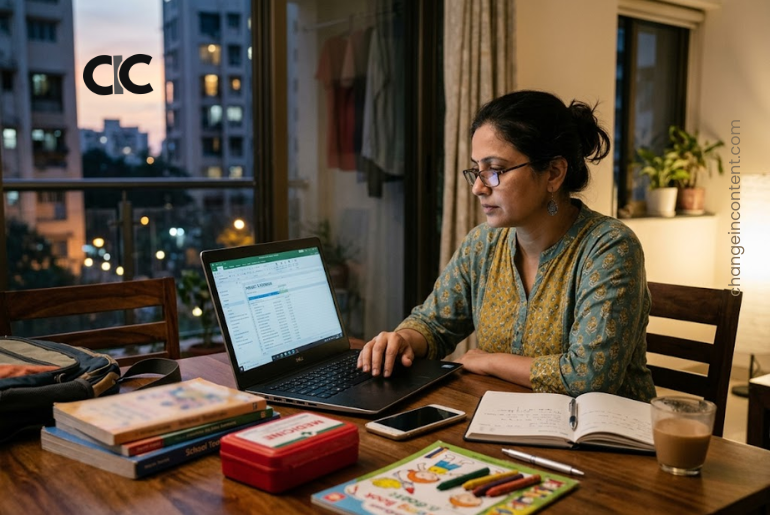
A senior manager finishes a client call, checks a message from her mother’s doctor, then rushes to help her teenager prepare for exams. Later that night, she logs back in to complete work she could not finish during the day.
For many women, this is not a dramatic one-off day. It is an ordinary Tuesday.
A growing number of women in their late 40s and 50s are caring for both children and ageing parents while trying to stay present in demanding careers. Researchers call this the sandwich generation because these women are caught in the middle of two generations who depend on them.
Midlife women caught between two generations
Women between the ages of 45 and 56 are often at the peak of their professional experience. They lead teams, manage clients, mentor younger employees, and hold critical institutional knowledge. They are the people companies trust when things get messy.
At the same time, many are also providing substantial unpaid care at home. They are helping children through school or early adulthood while also managing the health, appointments, and daily needs of ageing parents. In many homes, they are not only doing the care. They are doing the remembering, planning, calling, arranging, checking, and worrying.
Caregiving affects employees of all genders, of course. But women are still more likely to carry the larger share. Pew Research has found that women make up 60% of sandwich generation caregivers. They spend an average of 45 extra minutes each day on caregiving compared with men.
That extra time is not abstract. Over weeks and months, it becomes delayed promotions, interrupted sleep, postponed medical appointments, quieter ambition, and the slow exhaustion of always being needed.
The strain is also visible in newer data. A 2026 caregiving report by Cleo found that women at greatest risk of burnout are often those managing the most complex care load. That includes women in the sandwich generation at 64%, those caring for neurodivergent children at 59%, those parenting a teen at 52%, and those navigating perimenopause or menopause while caregiving at 51%.
For many Indian women, the pressure has already shaped employment choices. A survey cited by The Economic Times found that among women aged 35 to 54 who were supporting both ageing parents and children, 58% had left a job at some point due to caregiving responsibilities.
It is not only a family story. It is a workplace story too.
How workplaces can support women in the Sandwich Generation
As populations age and caregiving pressures grow, organisations that fail to support sandwich-generation employees risk losing experienced women at a critical stage in their careers. The answer does not require grand gestures. It requires workplaces to recognise caregiving as a real part of working life and respond with some seriousness.
Make flexibility meaningful
Flexible working remains one of the most useful forms of support for employees with caregiving responsibilities. Hybrid work, flexible hours, compressed workweeks, and caregiver leave can make it easier to handle school commitments, hospital visits, medication schedules, and unexpected family emergencies.
But flexibility only works when it is safe to use.
If an employee feels that working flexibly will quietly damage her reputation, reduce her visibility, or cost her future opportunities, then the policy exists on paper and nowhere else. This is also why many of the hottest work trends in 2026 are now circling back to a basic truth. Work has to fit real life better than it did before.
Expand support beyond childcare
A lot of workplace caregiving support is still built around parents of young children. That support matters and should continue. But women in the sandwich generation are often balancing childcare with eldercare, and the two look very different in practice.
Eldercare can mean hospital runs, medication management, emergency decisions, mobility support, paperwork, emotional care, and financial planning. Employers can respond by offering eldercare resources, care navigation support, counselling, emergency leave, and benefits that reflect these realities.
Wellbeing support also matters here. Caregiving stress does not stay politely outside office doors. The physical and mental toll can build quietly over time. That is why conversations around women’s health concerns at work need to include midlife women who are carrying multiple forms of strain at once.
Protect career development
Caregiving responsibilities should not quietly push career growth off the table.
Women in the sandwich generation still bring judgment, experience, leadership, and deep organisational memory. They should remain visible in succession planning, mentoring opportunities, leadership development, and promotion discussions.
Too often, the assumption becomes, “She has too much going on right now.” Sometimes, nobody says it aloud. The effect is the same. Women get passed over, not because they lack ability, but because the room quietly decides that their lives outside work have made them less available to ambition.
Prioritise wellbeing and burnout prevention
Many midlife women are balancing work, eldercare, parenting, finances, family logistics, and their own changing health needs. It does not take much for pressure to tip into burnout.
Access to mental health support, employee assistance programmes, realistic workloads, and regular wellbeing check-ins can help before someone reaches breaking point.
A more thoughtful workplace also stops romanticising women’s resilience. There is a difference between admiring a woman for “managing everything” and asking whether she should have to do so.
Reducing the load, not simply recognising it
Women in the sandwich generation are often expected to do more than balance work and family. Many carry a physical load and a mental one. They manage childcare, eldercare, school forms, medicines, food, home tasks, travel plans, appointments, bills, emotional labour, and the quiet project management of everyone else’s life.
One way to ease the pressure is to reduce the amount one person is expected to carry alone.
For families with the financial means, outsourcing some work can help. Cleaning support, meal preparation, transport help, or added childcare can create breathing room. But money is not the only answer.
Delegation matters too.
Partners can take on more. Older children can do more. Siblings can stop behaving like visiting relatives and start behaving like co-carers. At work, managers can distribute responsibilities more sensibly and build cultures where asking for help is treated as sensible rather than weak.
For many women, the real challenge is not the visible work. It is the invisible coordination. The planning. The remembering. The mental tabs are left open all day.
That burden does not appear by accident. It grows inside older social expectations about who will naturally hold everything together. In many cases, those expectations are reinforced by the same patterns of internalised misogyny at work and at home that teach women to keep carrying, keep coping, and keep smiling while doing it.
Reducing the load means sharing the work more honestly.
The closing thoughts
The sandwich generation is not a niche workplace issue. It is a preview of what a large part of the workforce already looks like.
Midlife women are often among the most valuable employees in an organisation. They bring experience, calm, memory, and perspective. Losing them because work refuses to recognise caregiving as part of life is shortsighted.
There is also something else worth saying.
These women do not need to be turned into workplace martyrs. They do not need another post praising how strong they are. Most of them would probably settle for a manager who understands, a family that shares the work properly, and a work culture that does not mistake care responsibilities for fading commitment.
The way forward is clear enough. Build flexibility that people can actually use. Treat eldercare as real. Keep women visible in leadership pipelines. Watch for burnout before it becomes an exit. Encourage a more equal sharing of responsibility at home.
A woman should not have to choose between being dependable at work and dependable at home simply because everyone assumes she can stretch forever.
Editorial Note and Disclaimer
This article is part of Change in Content’s Mosaic section, where we publish reflective, culture-led writing on work, gender, identity, and everyday realities that often go unnamed. This Sunday Read explores the sandwich generation through the lens of midlife women, caregiving, and workplace culture.
This article is an opinion-led feature supported by publicly available data and reporting. It focuses primarily on women because women continue to shoulder a disproportionate share of unpaid caregiving. At the same time, caregiving affects employees across genders and family structures.
Sources
- Pew Research Centre on sandwich generation caregivers
- Cleo Family Health Index Report 2026
- The Economic Times reports on Indian women aged 35 to 54 leaving jobs due to caregiving responsibilities
- Additional context from Change in Content’s related coverage
